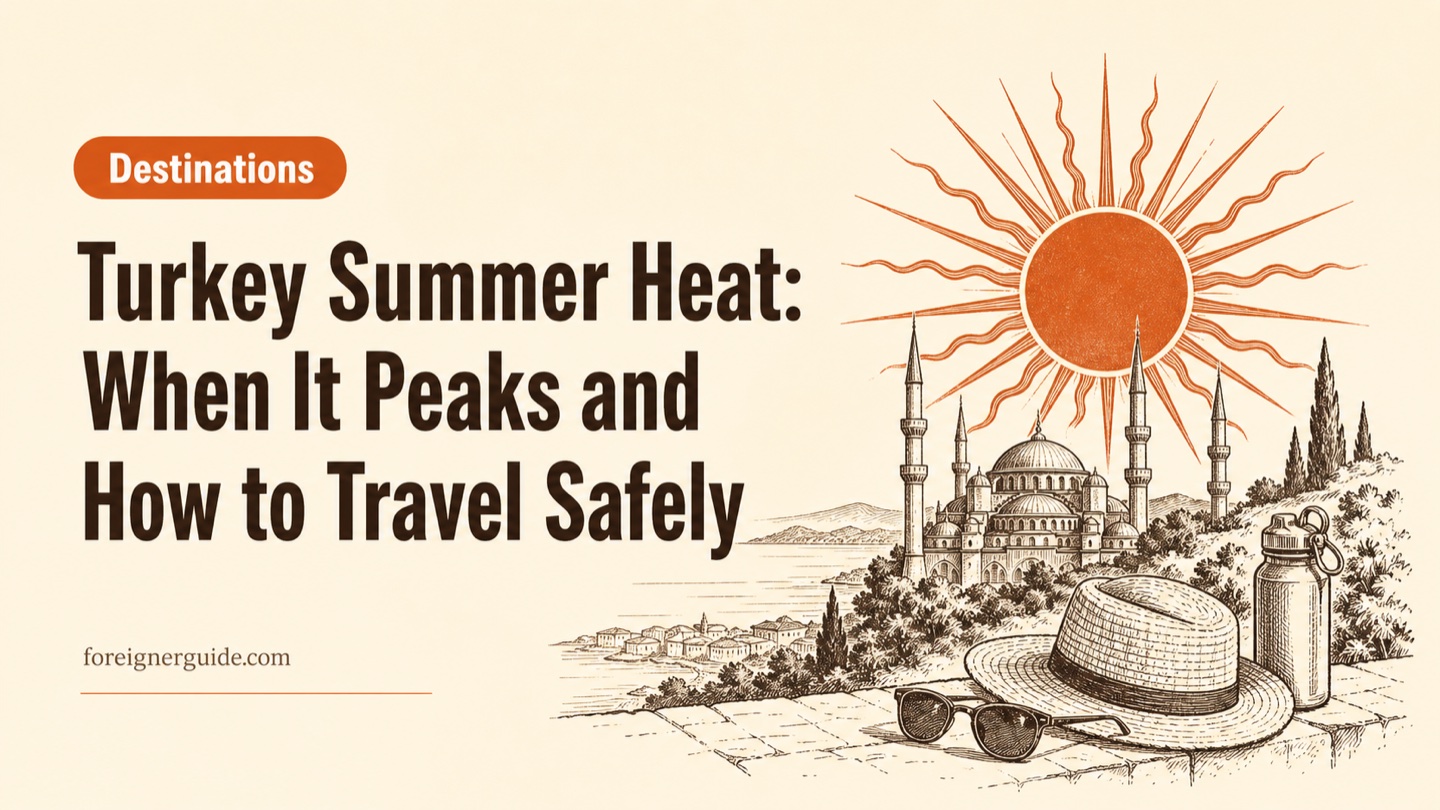
Turkey Summer Heat: When It Peaks and How to Travel Safely
Turkey's heat peaks in July and August, with the southeast topping 45°C. How hot each region gets, the 2025 wildfire risk, and how to travel safely.
Table of contents
Turkey's summer heat is most intense in July and August, when much of the country pushes past 40°C (104°F) and the southeast can top 45°C. As of July 2026, the Turkish State Meteorological Service (Meteoroloji Genel Müdürlüğü, or MGM) has no country-wide red heat alert in force, but recent summers show how far the mercury can climb. The service recorded a national-record 50.5°C at Silopi, in the southeastern province of Şırnak, in July 2025.
This guide is for travelers visiting Turkey roughly between June and September. It covers how hot each region gets, when the heat peaks, the wildfire risk that arrives with it, and simple ways to stay comfortable. This is general travel information, not medical advice; if you have a health condition, ask your own doctor before a hot-weather trip.
How hot does Turkey get in summer?
It depends heavily on where you go. A resort on the Mediterranean, a plateau in central Anatolia, and a city in the southeast can read very different numbers on the same July afternoon. The table below is a rough orientation for typical July and August daytime highs.
| Region | Typical July–August highs | What to expect |
|---|---|---|
| Mediterranean coast (Antalya) | about 35–43°C | Hot and humid; an evening sea breeze helps |
| Aegean coast (Izmir, Bodrum) | about 33–40°C | Strong midday sun, drier air |
| Istanbul & Marmara | about 30–35°C | Humidity makes it feel hotter |
| Central Anatolia (Cappadocia, Ankara) | about 30–35°C | Hot days, cooler nights at altitude |
| Southeast (Şanlıurfa, Diyarbakır) | often 40–45°C and above | The hottest part of the country |
Two things matter beyond the raw number. Along the coasts and in Istanbul, humidity makes the air feel hotter than the thermometer reads. Inland and at altitude, days are hot but nights cool off, so early mornings and evenings are your comfortable windows.
August is the hottest stretch, so plan around the day
August is usually the hottest month, with July close behind. Inland and city temperatures build from June and stay at their highest through August, and the interior takes the brunt of it: on the central plateau, cities such as Konya and Ankara turn hot and glaring by midday, while in the southeast Şanlıurfa runs far hotter still. Within a single day, the hardest stretch runs from late morning into late afternoon. The U.S. Centers for Disease Control and Prevention advises limiting time outdoors between about 10 a.m. and 4 p.m., when the sun is at its strongest.
The MGM publishes color-coded weather warnings. Check the forecast for the specific cities on your route a few days out rather than assuming one national picture: coastal and southeastern readings can sit 5–10°C above Istanbul on the same afternoon.
Wildfires can disrupt a summer trip
Extreme heat and dry winds raise wildfire risk, and 2025 was a hard year. In late July 2025, Turkey's AFAD disaster management agency reported that more than 50,000 people were evacuated as fires spread near İzmir and along the Mediterranean coast, and several districts were declared disaster areas. News reports at the time described tourists being moved out of hotels near Bodrum and Antalya, some of them by sea.
For a traveler, the practical steps are straightforward:
- Watch local news and MGM alerts before and during your trip, especially in forested coastal areas.
- Follow evacuation instructions from local authorities right away, without waiting to see how a fire develops.
- Keep some booking flexibility, since fires can close roads or cause short flight disruptions.
This is also where solid travel cover earns its keep. Trip-interruption and medical protection vary a lot between policies, which is exactly the kind of detail the guide on travel insurance coverage and the gaps to check walks through.
How do you stay safe in the heat?
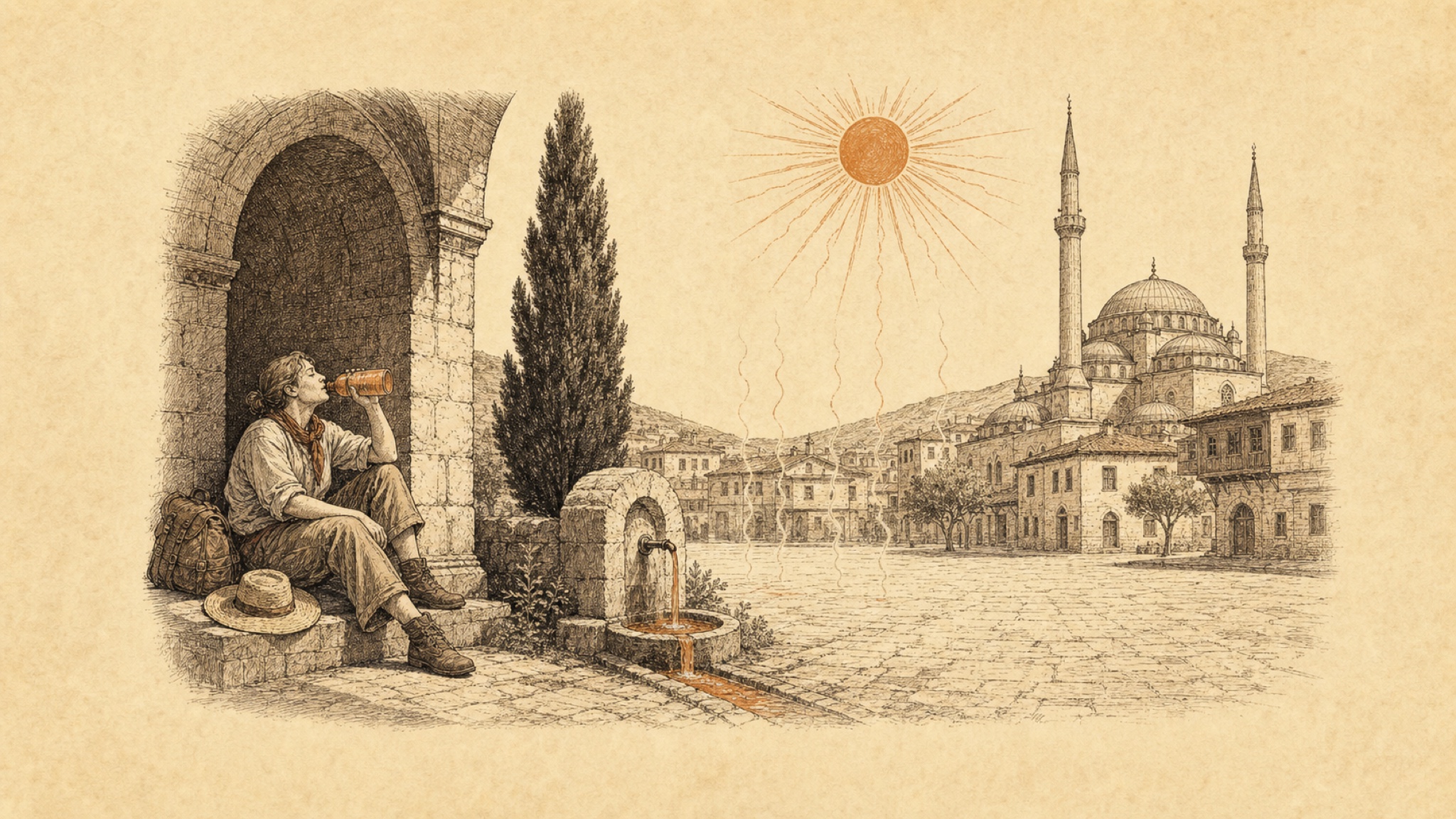
Drink water before you feel thirsty, stay in shade or air conditioning during the midday peak, and wear loose, light-colored clothing with a hat and sunglasses. The CDC's travelers' health guidance notes that heat-illness risk rises with how active you are, your age, and how well you hydrate, so pace long sightseeing days instead of packing everything into one.
Learn the warning signs, because heat exhaustion and heat stroke are different and the second is a medical emergency.
- Heat exhaustion: heavy sweating, headache, dizziness, nausea, and a fast heartbeat. Move to a cool place, sip water, and rest.
- Heat stroke: confusion, a very high body temperature, and sometimes skin that has stopped sweating. Treat this as an emergency, cool the person at once, and get help.
Turkey uses 112 as its single emergency number for ambulance, police, and fire. Save it in your phone before you go.
Planning around the heat
If your dates are flexible, the shoulder months are kinder: late May to mid-June, or September into October, keep the coast warm enough for swimming without the peak-summer extremes. If you do travel in high summer, book accommodation with reliable air conditioning, keep outdoor sightseeing to mornings and evenings, and use the hottest hours for indoor sites, a long lunch, or the beach.
One date worth checking is Ramazan Bayramı, the Turkish name for Eid al-Fitr, whose timing Türkiye's Presidency of Religious Affairs (Diyanet) confirms each year by moon sighting. For 2027 it is expected in mid-March, roughly March 9–11, and it is a national holiday when domestic travel surges: intercity buses and flights fill up and many shops and offices close for several days. Keep in mind that the coastal Aegean and Mediterranean resorts stay hot but catch more of a sea breeze than the inland plateau, and that religious-holiday dates fall about 11 days earlier each year, so re-check the exact dates for your own travel year.
Before you lock in the trip, it also helps to confirm the practical basics up front, the kind of checklist covered in the guide on what to confirm before you book. Plan around the calendar and the clock, and even high-summer Turkey stays comfortable to explore.